Custom Pearl Jewelry & Sets with Love
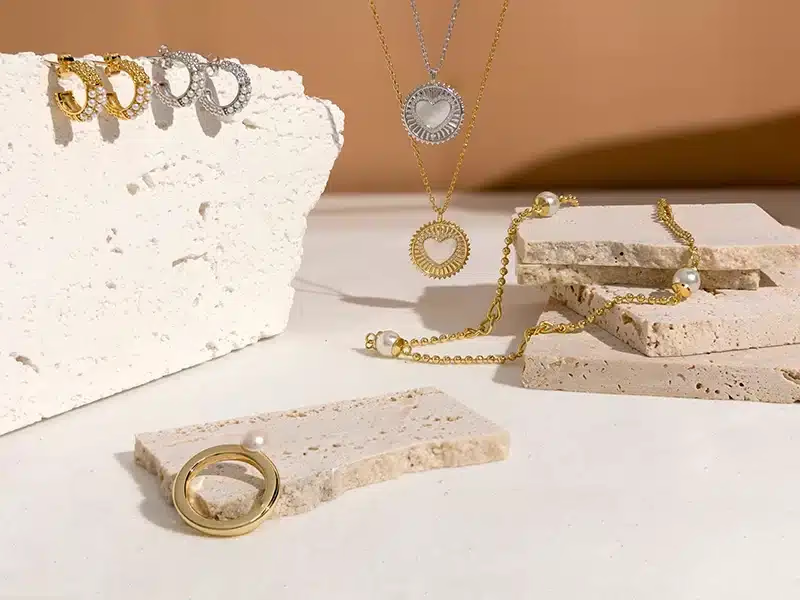
Pearl jewelry sells itself well to fine jewelry lovers and fashion jewelry fans. As a pearl jewelry manufacturer specializing in using freshwater pearls, Pideajewelry’s custom pearl jewelry & sets help boost your sales and brand recognition.
Find that Pearl Jewelry for Your Business
Lorem ipsum dolor sit amet, consectetur adipiscing elit. Ut elit tellus, luctus nec ullamcorper mattis, pulvinar dapibus leo.
Pearl Jewelry Sets
Top Tips
- Popular Among Bridal Jewelry
- Both Vintage & Modern Designs
Pearl Jewelry With Birthstone
Top Tips
- Pearl Goes with All Birthstones Colors
- Design Your Own Combination
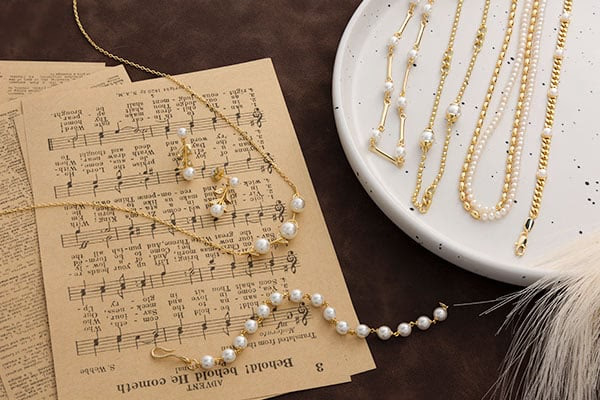
Pearl Jewelry With Link Chain
Top Tips
- Loved as Minimalist Designs
- Choose Any Types of Link Chains
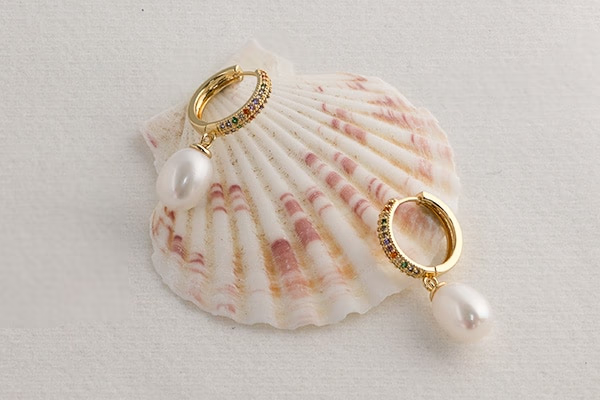
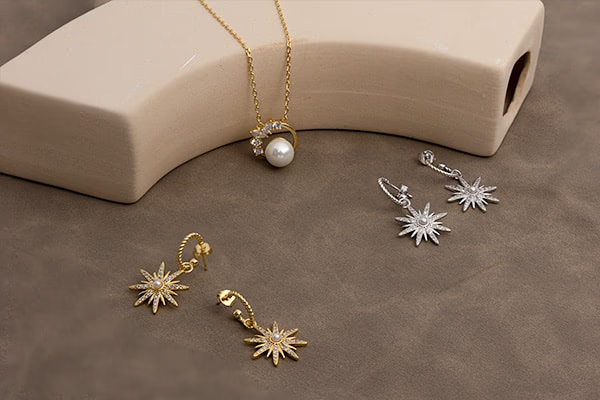
Pearl Jewelry with CZ
Top Tips
- 3A and Plus Cubic Zirconia
- Flexible Stone Cuttings & Pearl Types
Pearl Jewelry Sets
Top Tips
- Popular Among Bridal Jewelry
- Both Vintage & Modern Designs
Pearl Jewelry With Birthstone
Top Tips
- Pearl Goes with All Birthstones Colors
- Design Your Own Combination
8
Factors Affecting Freshwater Pearl Jewelry Price
01 Luster
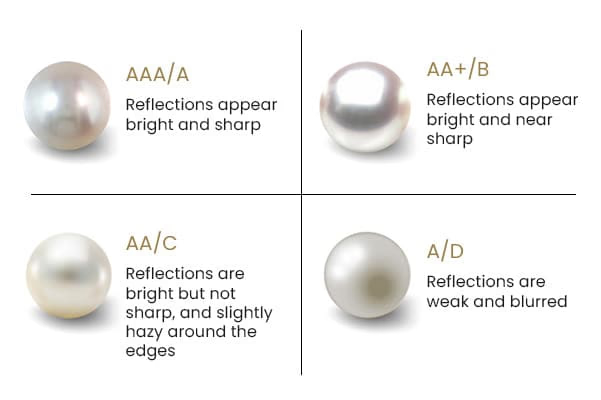
Luster is probably the most important value factor in judging freshwater pearl quality.
The more lustrous the pearl, the brighter and clearer the reflection, and the better the quality.
GIA divides the luster of pearls into 5 categories, ranging from “excellent” to “poor”. Factors such as nacre quality, rate of nacre deposition, type of mollusk, and its health can all affect a pearl’s luster.
02 Types Of Pearls
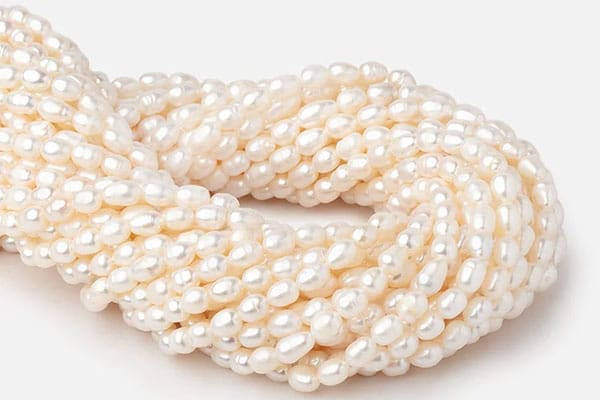
Pearl type plays a vital role in determining jewellery prices. Freshwater pearls are categorized into different types by how they are cultured/sourced.
Apart from naturally cultured and wild freshwater pearls, there are also pearls manufactured by compressing power into pearl beads, which cost much less when made into pearl jewelry compared to cultured pearls.
03 Size
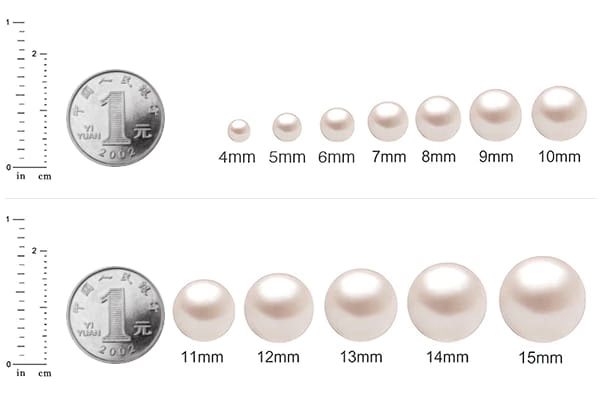
The pearl’s size is an obvious factor that drives the pearl jewelry’s value.
The size of round and near-round pearls is indicated by their diameter in millimeters, other shapes are measured according to their length/depth and diameter/width.
The size of a pearl depends on its type, rarity, and growth period. All other factors of value being equal, the larger the pearl, the greater its value.
- Freshwater Pearl Size – 4 to 14mm
04 Shape
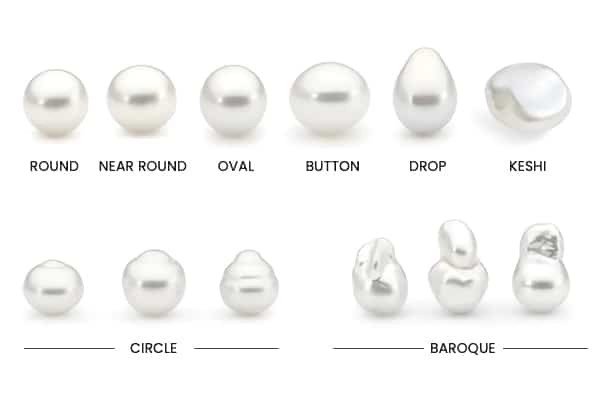
Round pearls are the most valuable, as oysters rarely produce a (nearly) perfect round shape and thus command a higher price than other-shaped pearls.
GIA divides pearls into seven basic shapes: round, near-round, button, drop, oval, semi-baroque, and baroque.
Round and near-round are more common in saltwater pearls than in freshwater pearls, thanks to a nucleus implanted in the oyster. Therefore, between Akoya pearls and freshwater pearls, all of the same quality, freshwater pearls can cost more than saltwater pearls.
05 Color
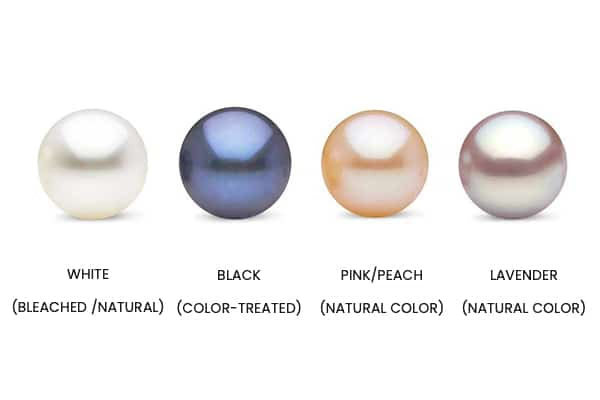
Freshwater pearls with natural colors are usually more valuable than dyed ones.
Natural freshwater pearls come in a stunning array of colors. From white, cream, pink, yellow, green, and blue to black with many shades in between. Additionally, pearls often come in delicate shades such as greens, blues, and pinks.
Most freshwater pearls are white and lavender.
06 Surface
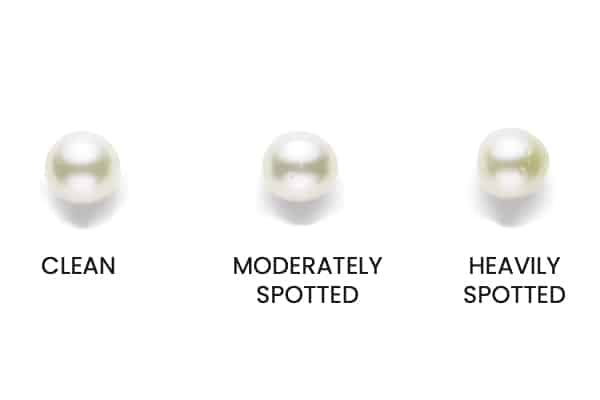
Surface quality affects the durability and luster of pearls.
All being equal, pearls with fewer blemishes are more valuable. Most pearls have imperfections such as bumps, pits, spots, and wrinkles. Minor irregularities are acceptable.
GIA grades the surface quality of pearls as clean, lightly spotted, moderately spotted, or heavily spotted. Naturally flawless pearls are hard to find.
07 Nacre Quality
Nacre is a natural substance produced by mollusks to form pearls. The pearl jewelry by Pearl comes from these nacres carefully cultured by our team.
The thicker the nacre, the more valuable the pearl. The quality of the nacre affects the durability and luster of the pearl and indicates how long the pearl has been cultivated.
GIA defines 3 categories. They are acceptable, nucleated, and chalky in appearance. Pearls with a thin nacre usually have a low luster and can appear chalky in color. Natural pearls and most freshwater cultured pearls do not contain pits; they are made almost entirely of nacre. This distinction makes freshwater pearls more durable than saltwater pearls.
08 Jewelry Metal And Craftsmanship
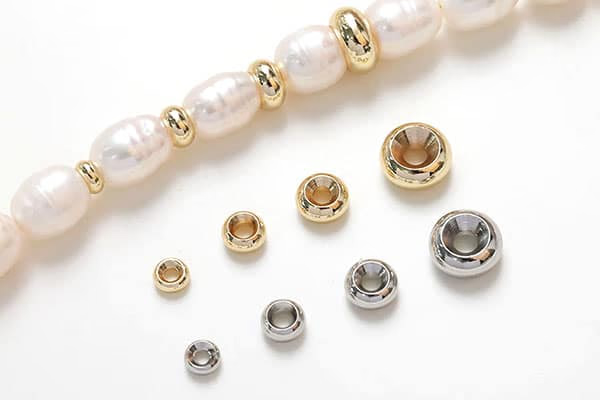
Apart form the pearl itselfe, the parts of jewellery, such as clasps and chains, can impact the price of pearl jewellery in several ways. Jewelry metals like brass, silver, stainless steel, and gold play important roles in the overall quality, durability, and aesthetics of the piece.
The craftsmanship involved in assembling the various components of the jewellery can impact the price. Attention to detail, precision in stringing pearls, and secure attachment of clasps and findings all contribute to the overall quality of the piece.
Freshwater Pearl Shape Guide
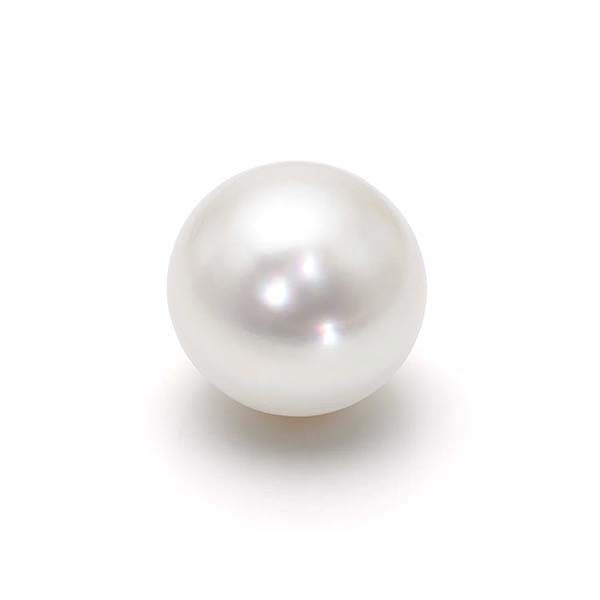
Round Pearl
- Considered the most valuable and desired shape
- Symmetrically spherical in appearance
- High luster, smooth surface, and excellent quality
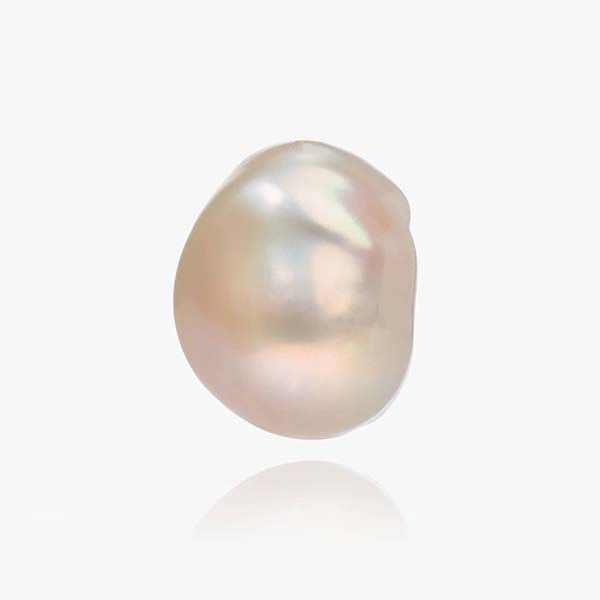
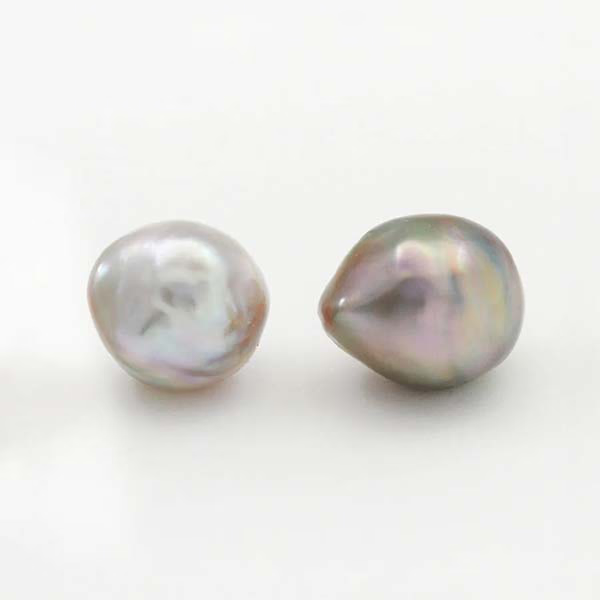
Baroque Pearl
- Non-symmetrical shape with unique, artistic appeal
- Can have various freeform shapes and contours
- Ideal for creating distinctive and statement jewelry
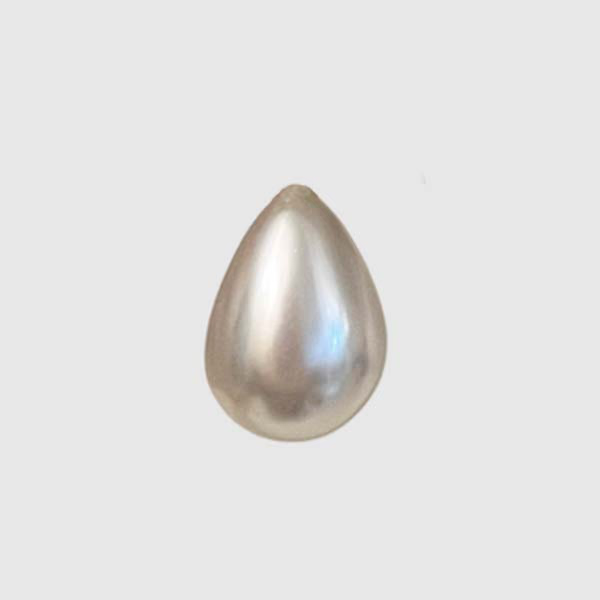
Drop Pearl
- Resembles a small water droplet or tear shape
- Elegant and elongated appearance
- Often used as a focal point in earrings or pendants
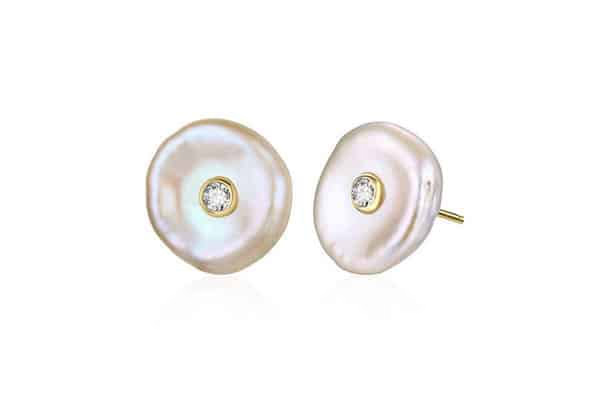
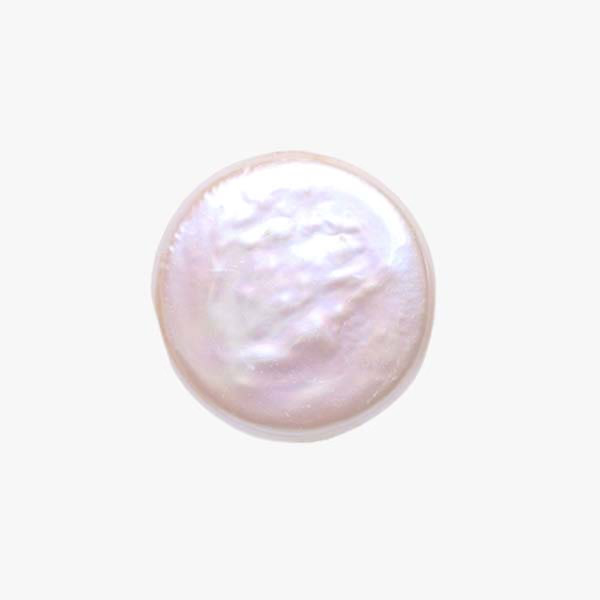
Button Pearl
- Flat on one side and slightly domed on the other
- Versatile shape, suitable for various jewelry designs
- Can be used as accents or in clusters
Semi-Baroque Pearl
- Moderately irregular shape with some symmetry
- Not perfectly round, but not fully baroque either
- Offers uniqueness while still maintaining elegance
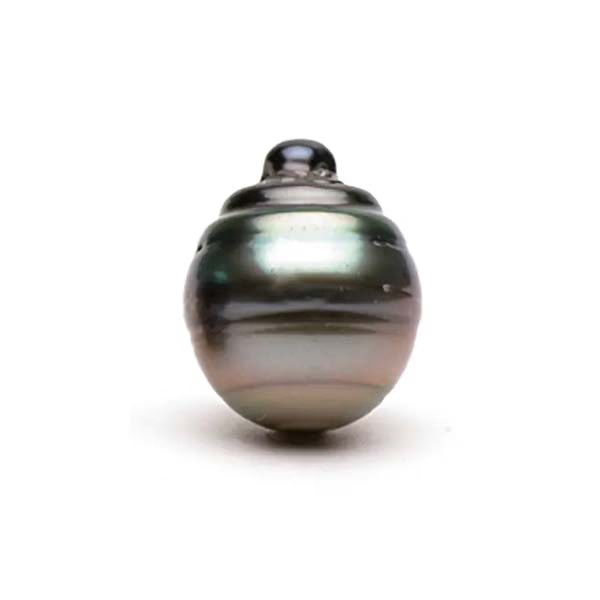
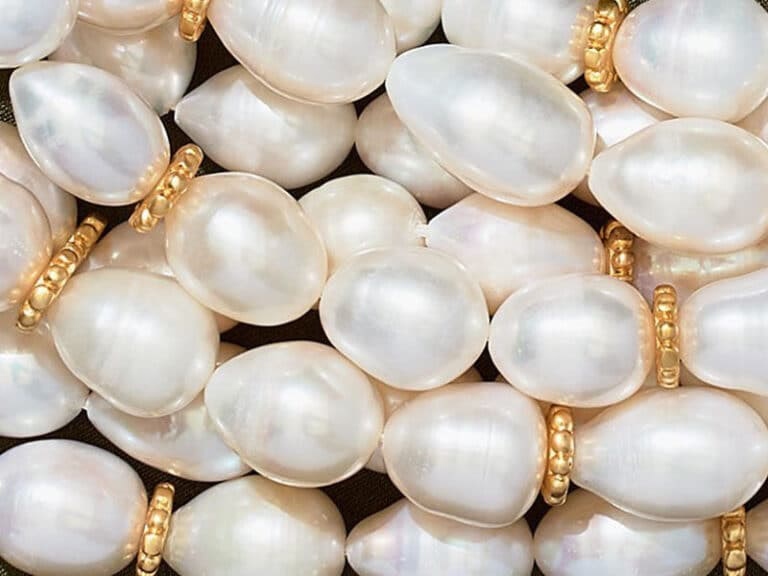
Circled/Ringed Pearl
- Exhibits rings or grooves around the pearl’s surface
- Adds texture and visual interest to the pearl
- Creates a fascinating and distinctive appearance
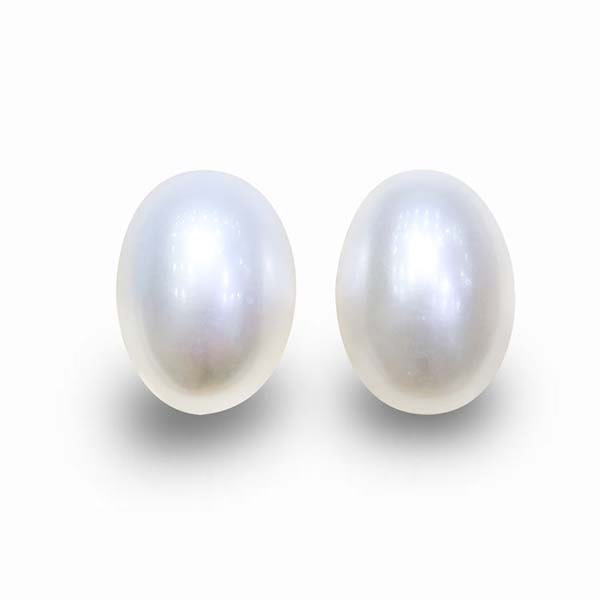
Oval/Egg-Shaped Pearl
- Flattened oval or egg-shaped appearance
8 Differences Between Cultured Pearls Vs Natural Pearls
Cultured pearls are cultivated through human intervention, and are naturally grown too. Natural pearls are formed spontaneously within oysters or mollusks in their natural habitat.
Cultured pearls are created through the insertion of a nucleus into an oyster or mollusk, while natural pearls form without human intervention.
Compared to natural pearls, which are rare and highly priced, cultured pearls are generally more affordable. The availability and controlled cultivation process make them a more accessible option for those seeking the elegance and beauty of pearls.
Cultured pearls are more readily available in the market due to controlled cultivation techniques, while natural pearls are limited in supply and often found in antique or specialty markets.
Start Your Custom Jewelry
From unique designs and logo engravings to fully bespoke collections, our expert manufacturing team works closely with you to bring your ideas to life.